

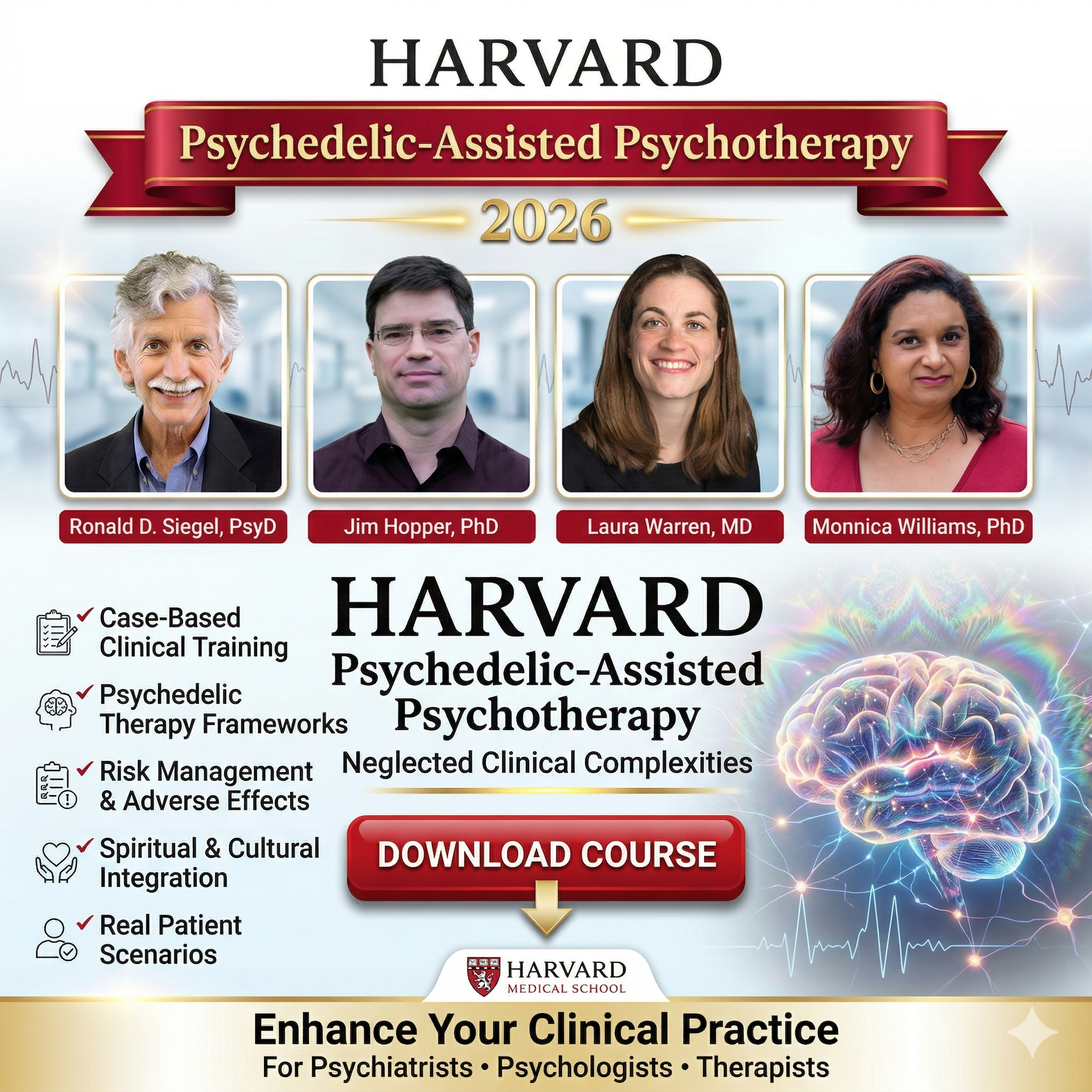


Harvard Psychedelic-Assisted Psychotherapy
Neglected Clinical Complexities
Conference Overview
Engage with the evolving landscape of psychedelic-assisted psychotherapy by exploring complex clinical challenges, novel experiences, and emerging best practices at our 5th annual conference. Gain confidence through case studies, vignettes, and expert guidance designed to support both new and experienced clinicians.
Clinicians encounter a wide range of complex clinical challenges in psychedelic-assisted psychotherapy (PAP). While many of these arise in other forms of treatment, longer sessions with dramatically lowered defenses and the frequent arising of transpersonal, spiritual, and other novel experiences require clinicians to broaden their skillsets and relational capacities.
In addition to providing an update to progress in the field, our 5th conference will explore a wide range of these challenges, including potential adverse effects of PAP, how to identify and work with our own metaphysical assumptions, and how to understand and respond to novel experiences.
The program will include multiple case studies and clinical vignettes designed to illuminate the nuances of PAP for both newcomers and veteran therapists alike. If you would like to join the exploration and gain confidence in addressing these and other often neglected facets of the work, please join us in February 2026, either in person or online. We look forward to meeting you or seeing you again!
Learning Objectives
Articulate the basic structure and core principles of psychedelic-assisted psychotherapy (PAP).
List the most commonly used medicines in PAP and their current applications.
Review the current evidence base for the efficacy of PAP for various conditions.
Explain how clinicians can improve the patient experience by fully exploring the emotions of grief and awe in PAP sessions.
Summarize common metaphysical interpretations of the PAP experience, and techniques to respectfully acknowledge these in client sessions.
Identify opportunities to effectively integrate spiritual, existential, religious, and theological domains in PAP.
Describe Western vs. Indigenous approaches to understanding and working with non-ordinary states of consciousness.
List several potential harms that can occur with PAP, and how therapists can minimize them.
Discuss benefits and challenges of working within a multidisciplinary PAP team.
Name categories of somatic experiences common in PAP.
Describe the foundations and aspects of the non-directive approach as a framework for working with participants through psilocybin sessions, and pragmatic advantages of this approach when working with OCD.
Articulate effective ways that clinicians can address neglected complexities of the clinical encounter in PAP.
Who Should Participate
This comprehensive program is designed to support a wide range of mental health and medical professionals, whether you are new to the field or a veteran practitioner.
Psychiatrists & MDs
Psychologists
Social Workers & MFTs
Researchers
Core Themes & Objectives
Exploring the depths of clinical practice, integration, and emerging modalities in PAP.
Foundations & Evidence
Basic structure, core principles, commonly used medicines, and current clinical outcomes and evidence of PAP.
Clinical Complexities
Addressing adverse effects, minimizing harms, handling somatic experiences, and navigating sessions that don't go according to plan.
Spiritual & Cultural Integration
Working with metaphysical assumptions, integrating SERT domains, and bridging Western and Indigenous frameworks (e.g., understandings of ego dissolution).
Specific Modalities
Psychedelic-boosted behavior therapy (using OCD as a case example) and navigating the benefits and challenges of interdisciplinary teams.
Course Directors
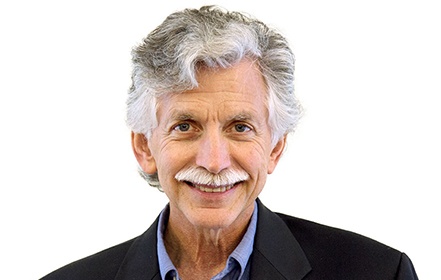
Ronald D. Siegel
PsyD | Course Director- Faculty, Center for Mindfulness and Compassion, Cambridge Health Alliance
- Assistant Professor of Psychology in the Department of Psychiatry, Part-time Harvard Medical School
- Faculty, Institute for Meditation and Psychotherapy

Jim Hopper
PhD | Course Director- Consultant, Outpatient Addictions Service, Cambridge Health Alliance
- Teaching Associate in Psychiatry, Part-time Harvard Medical School
- Psychotherapist in Private Practice

Laura Warren
MD | Course Director- Psychiatry Faculty Member, Cambridge Health Alliance
- Faculty and Mentor, CHA Center for Mindfulness and Compassion
- Lecturer on Psychiatry, Part-time, Harvard Medical School
- Member, Board of Advisors, Institute for Meditation and Psychotherapy
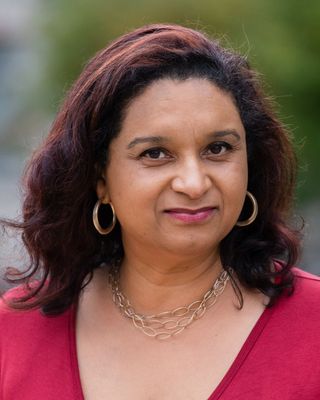
Monnica Williams
PhD | Course Director- Canada Research Chair for Mental Health Disparities, Director of the Laboratory for Culture and Mental Health Disparities and Associate Professor, School of Psychology, University of Ottawa, Canada
- Clinical Director, Behavioral Wellness Clinic, LLC
Karen Kuc
MPH | Course Director- Director, Continuing Education in Psychiatry, Cambridge Health Alliance
- Associate in Psychiatry, Harvard Medical School
Course Faculty
Marni Chanoff
MD- Founder and CEO, Joy In Health
- Clinical Associate, McLean Hospital
- Lecturer on Psychiatry, Part-time, HMS
Terence Ching
PhD- Licensed Clinical Psychologist
- Instructor, Department of Psychiatry, Yale School of Medicine
Rheinila Fernandes
MD- Psychiatrist in Private Practice
- Embodied Mind Medicine
Daniel Grossman
MA- Fifth-year doctoral candidate in Medical/Clinical Psychology
- University of Alabama Birmingham
Daan Keiman
MA- Educational Lead ADEPT, Open Foundation
- Psychedelic and Buddhist Chaplain, Heart-Head Healing
Roman Palitsky
MDiv, PhD- Assistant Professor, Psychiatry and Behavioral Sciences, Emory University
- Director of Research Projects in Spiritual Health, Emory University
Sergio Pérez Rosal
MD- Adjunct Professor, Psychedelics and Consciousness Studies, University of Ottawa
- Research Associate, Chacruna Institute
Anne Vallely
PhD- Associate Professor, Classics and Religious Studies, University of Ottawa
- Founding Member, Academy of Mindfulness and Contemplative Studies
Full Conference Schedule
All agenda sessions are in Eastern Time.
Day 1
Thursday, February 26, 2026
Registration Check-in & Continental Breakfast
Welcome & Introduction
Jim Hopper; Ronald D. Siegel; Laura Warren; Monnica Williams
Back to Basics: The Method and the Medicines of PAP
Monnica Williams
Updates on the Evidence: Clinical Outcomes of PAP
Jim Hopper; Ronald D. Siegel
Panel Discussion/Q&A
Jim Hopper; Ronald D. Siegel; Monnica Williams
Networking Break
Neglected Considerations for Set & Settings
Laura Warren
Integrating SERT in Psychedelics Therapy
Roman Palitsky
Q&A
Roman Palitsky
Lunch Break
Neglected Complexities in Psychedelic-Assisted Psychotherapy: A Religious Studies Perspective
Anne Vallely
Minding the Body: Somatic Experiences in Psychedelic Therapy
Daniel Grossman
Networking Break
Respecting the Spiritual Understanding and Framework of your Clients
Daan Keiman
Panel Discussion/Q&A
Anne Vallely; Daan Keiman; Daniel Grossman
Day 2
Friday, February 27, 2026
Welcome Day 2
Integrating Western & Indigenous Perspectives
Sergio Pérez Rosal
Case Vignettes: Ego Dissolution – Western vs. Indigenous Understandings
Sergio Pérez Rosal; Ronald D. Siegel
Panel Discussion/Q&A
Ronald D. Siegel; Sergio Pérez Rosal
Networking Break
Learning from Bad Experiences
Monnica Williams
Staying Alert to Potential Harms
Roman Palitsky
Panel Discussion/Q&A
Monnica Williams; Roman Palitsky
Lunch Break
Toward Psychedelic-Boosted Behavior Therapy: OCD as a Case Example
Terence Ching
Benefits and Challenges of Interdisciplinary KAP
Marni Chanoff
Networking Break
Complexities in Psychedelic-Assisted Therapy: When Things Don't Go According to Plan
Rheinila Fernandes
Wrap-Up Panel Discussion/Q&A
Monnica Williams; Laura Warren; Ronald D. Siegel; Jim Hopper
Attendee Reviews
Hear what past attendees have to say about the conference.
"This conference deeply expanded my understanding of somatic experiences in PAP. The case studies were incredibly practical for my private practice. A must-attend!"
Dr. Sarah Jenkins
Clinical Psychologist
"The integration of Indigenous perspectives with Western clinical frameworks was profound and respectfully handled. The insights on ego dissolution were invaluable."
Mark T.
Licensed Clinical Social Worker
"As a psychiatrist new to psychedelic-assisted therapy, the expert guidance on navigating adverse effects and 'bad trips' gave me the confidence I needed to move forward."
Dr. Emily Chen
Psychiatrist
Frequently Asked Questions
How do I access the course recordings and materials?
Are Continuing Education (CE) credits or certificates available?
Is this course suitable for beginners in Psychedelic-Assisted Psychotherapy?
Ready to Access the Conference Materials?
Get immediate, lifetime access to all session recordings, slide decks, and supplementary resources.
Purchase Full Access
7 reviews for Harvard Psychedelic-Assisted Psychotherapy: Neglected Clinical Complexities 2026