



(22 customer reviews)
Sale!

Transforming the Living Legacy of Trauma with Janina Fisher, PhD: Tools for Survivors and Therapists

Original price was: $310.00.Current price is: $94.95.

Transforming the Living Legacy of Trauma with Janina Fisher, PhD: Tools for Survivors and Therapists
You're watching: Transforming the Living Legacy of Trauma with Janina Fisher, PhD: Tools for Survivors and Therapists
(22)
Original price was: $310.00.Current price is: $94.95.
Original price was: $890.00.Current price is: $154.95.
4-Day: Positive Neuroplasticity Course with Rick Hanson, Ph.D
4-Day: Positive Neuroplasticity
(72)
Original price was: $385.00.Current price is: $94.95.
Original price was: $790.00.Current price is: $144.95.
3-Day Advanced Mindfulness Course
3-Day Advanced Mindfulness
(47)
Original price was: $600.00.Current price is: $94.95.
Treating Self-injury
(39)
Original price was: $249.95.Current price is: $94.95.
Total: $679.70

✅ Instant Downloads

✅ 24/7 Support

✅ Payments are secure and encrypted

Guaranteed Safe Checkout

Why traditional trauma treatment methods make things worse for the client – and what to do instead


See what the legends of trauma treatment are saying about Janina’s Living Legacy of Trauma materials!

Bessel van der Kolk

"It's a marvelous and easily accessible work that should be part of every therapist's skill set."

— Bessel van der Kolk, MD
Author, The Body Keeps the Score

Gabor Maté

"Janina Fisher distills the essence of modern trauma theory... The result is a welcome, reader-friendly primer."

— Gabor Maté, MD
Author, The Realm of Hungry Ghosts

Pat Ogden

"Complex theories are transformed into simple, easily understood, useful concepts."

— Pat Ogden, PhD
Author, Sensorimotor Psychotherapy

Traditional therapy aims to heal trauma by urging the client to share their experiences with a safe validating witness.

But clients revealed that telling the story often engulfed them in overwhelming sensory or emotional responses that felt re-traumatizing rather than healing.

The reality is successful treatment is NOT about dealing with traumatic memories. It’s about helping the client recover from the enduring effects of trauma.

This “living legacy” of trauma shows up as intense physical, perceptual, and emotional reactions to everyday things. Reactivated by seemingly harmless reminders of the original situation their body tenses up, their heart pounds...

They see horrifying images... Experience sudden fear, pain, or rage. They may startle as if facing Godzilla, even in the safety of their own homes...or your office.

These unconscious reactions can make the client feel “crazy,” leading to a long list of symptoms including self-destructive impulses, substance abuse, disconnection, anxiety, depression, and more.

Dr. Janina Fisher saw the troubles with this “storytelling” approach from the start of her career. She knew there had to be a better way. So, she’s devoted her 40-year career to transforming trauma treatment from continued suffering to a positive, informed process.

When you register for this all-new training, you’ll discover the results of her research and experience, and her unique methods for helping clients defeat traumatic symptoms... And finally feel present, hopeful, and in control of their body and mind.

Transforming the Living Legacy of Trauma

Tools for Survivors and Therapists

$309.97 Value
Just $94.95 Today — Stunning Savings!
Yes! I Want to Register Now

Janina's approach to trauma healing is refreshing, non-pathologizing, integrative and backed by research. In this self-paced training, you’ll discover how to:

  • Break down trust barriers with clients so they feel seen, heard, and validated
  • Help clients experience themselves as ingenious survivors instead of humiliated victims
  • Make it easier to believe they can recover, without having to explore all the details and reexperience the crushing emotions
  • Help clients understand the baffling and intense reactions that plague them, often for years, so they don’t feel so “wrong”
  • And SO much more!

What You'll Find In This Course

PART 1 — Tangible Tools to Transform Clinical Practice

Empowering Trauma Survivors

In this section, you'll discover how to:

  • Work with a traumatized nervous system in clinical practice
  • Use psychoeducation to help clients manage overwhelming symptoms
  • Overcome the challenge of post-traumatic coping
  • Help clients recover from self-destructive patterns of coping
  • Assess the risks, limitations, and the nature of the latest research
  • And more...

Neurobiologically Informed Trauma Treatment

In this section, Janina pulls back the curtain on the mind-body connection in trauma treatment and reveals:

  • How “the body keeps the score”
  • Sensorimotor Psychotherapy: principles and interventions for resolving symptoms
  • Somatic interventions to help clients regulate autonomic regulation
  • How to treat trauma-related fragmentation and dissociation
  • How to work with—and change—traumatic attachment patterns
  • And more...

Potential for Greater Trauma Recovery

In this section, you’ll discover how to:

  • Build a compassionate relationship to one’s selves
  • Use mindfulness techniques specific for trauma survivors
  • Integrate presented tools in clinical session
  • And much more!

PART 2 — The Workbook

Workbook

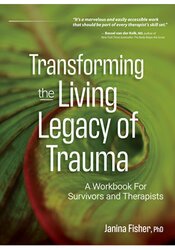
Transforming the Living Legacy of Trauma: A Workbook for Survivors and Therapists eBook

This powerful eBook is packed with information and worksheets Dr. Janina Fisher uses herself to help clients navigate the healing journey. In this bestselling collection, you’ll discover:

  • Step-by-step strategies that can be used in session and on the client’s own time so they can practice their recovery on their own
  • Simple diagrams that make sense of the confusing feelings and physical reactions survivors experience
  • Worksheets to practice the skills that bring relief and ultimately healing
  • And SO much more!

When you register today, you’ll receive a FREE bonus (a $59.99 value!)

The Body as a Shared Whole: Using Visualization Techniques to Treat Dissociation (Digital Seminar)

with Janina Fisher, PhD

Disconnection from self in the context of traumatic experience is a survival strategy that allows survivors to disown what is happening and disown the parts that are victimized.

The cost of dissociation as an instinctive mental survival response is often lifelong internal conflicts, shame and self-loathing, difficulty self-soothing, and complications in relationships with others.

Despite feeling irretrievably damaged, all humans have a brain capable of visualizing or imagining experiences of acceptance, closeness, and comfort that evoke the same somatic sensations associated with early secure attachment.

Helping clients discover their split-off younger selves and imaginatively bring them “home” spontaneously leads to an internal sense of warmth and safety they have never known.

In this seminar, Dr. Janina Fisher explores the therapeutic power of using somatic experience to foster internal attachment to clients’ most deeply disowned younger selves.

Janina Fisher

Meet Your Expert: Janina Fisher, PhD

Janina Fisher, PhD, has spent over 40 years working with survivors, helping them to navigate the healing journey. She is a licensed Clinical Psychologist and Instructor at the Trauma Center, an outpatient clinic and research center founded by Bessel van der Kolk.

Known for her expertise as both a therapist and consultant, Dr. Fisher lectures and teaches internationally on topics related to the integration of research and treatment.

Transforming the Living Legacy of Trauma with Janina Fisher, PhD

Tools for Survivors and Therapists

When you register today, you'll receive instant access to:

  • Tangible Tools to Transform Clinical Practice
  • Transforming the Living Legacy of Trauma eBook
  • The Body as a Shared Whole (Bonus Seminar)
$309.97 Value
Just $94.95 Amazing Savings!
Transform Your Practice Today

Secure Checkout • Lifetime Access
22 reviews for Transforming the Living Legacy of Trauma with Janina Fisher, PhD: Tools for Survivors and Therapists

  1. Kevin ONeill
    This is a strong resource, and it helped me rethink several habits in trauma therapy. The strengths are the clear nervous-system focus, the non-shamin...More
    This is a strong resource, and it helped me rethink several habits in trauma therapy. The strengths are the clear nervous-system focus, the non-shaming language, and the practical exercises that keep clients anchored in the present. My only reason for 4 stars is that some sections feel dense on first pass, so I had to revisit them to fully integrate the concepts. That said, once I slowed down, the payoff was big. Clients who used to interpret their reactions as “I’m crazy” now understand them as survival responses, and that change alone reduces shame. I’ve also seen improved tolerance for session work because we prioritize regulation and pacing. Overall, it’s an excellent investment for clinicians working with complex trauma and dissociation.
    Helpful? 0 0
    Stephen Walker
    I’ve read many trauma books, but few are this usable. The steps for working with overwhelming affect, startle responses, and dissociative shifts are c...More
    I’ve read many trauma books, but few are this usable. The steps for working with overwhelming affect, startle responses, and dissociative shifts are concrete and respectful. I especially value the emphasis on helping clients make sense of their reactions without feeling defective. The psychoeducation and worksheets improve engagement because clients can practice skills on their own time. The approach also supports therapists—there’s less fear of “making things worse,” because the work is paced and regulation-focused. In my practice, this has translated into better alliance and more stable progress, particularly with clients who used to get flooded when we touched trauma memories. The training feels modern, science-informed, and compassionate. I’m already sharing it with peers and supervisees.
    Helpful? 0 0
    Robert Mitchell
    This is the kind of trauma resource that changes a clinician’s posture in the room. It reinforced the idea that safety and stabilization are not “avoi...More
    This is the kind of trauma resource that changes a clinician’s posture in the room. It reinforced the idea that safety and stabilization are not “avoiding trauma,” they are the foundation for recovery. The material helped me better address shame, self-loathing, and internal conflict by treating symptoms as adaptive responses rather than pathology. I also liked the guidance on working with attachment patterns and the way it encourages portioning the work so clients remain connected to the present. The practical tools are easy to translate into session plans, and the exercises make therapy feel actionable for clients. Since integrating the approach, clients report fewer panic surges and more confidence managing triggers. If you want effective trauma treatment that doesn’t rely on repeated storytelling, this is a great fit.
    Helpful? 0 0
    Matthew Turner
    I purchased this after a colleague recommended it for dissociation and chronic trauma. I’m glad I did. The explanations are clear enough for clients y...More
    I purchased this after a colleague recommended it for dissociation and chronic trauma. I’m glad I did. The explanations are clear enough for clients yet accurate enough for clinicians. I appreciate the practical emphasis: how to introduce psychoeducation, how to normalize intense reactions, how to build mindfulness skills that don’t overwhelm survivors. The “survivor ingenuity” reframe is powerful—clients stop seeing themselves as broken and start seeing patterns as protective strategies that can be updated. I’ve used the diagrams to explain triggers and body memory, and clients immediately “get it.” The result has been fewer emotional crashes after sessions and more self-compassion between appointments. It also fits alongside CBT, EMDR, and somatic work without conflict. A strong addition to any trauma library.
    Helpful? 0 0
    Jonathan Harris
    I’m impressed by how well the material integrates neuroscience, somatic strategies, and parts-informed work without turning into jargon. The central i...More
    I’m impressed by how well the material integrates neuroscience, somatic strategies, and parts-informed work without turning into jargon. The central idea—that the “legacy” lives in the body’s reactions—gave me a clean map for treatment planning. My clients often fear their own sensations and impulses; the tools here help them understand those responses as survival-based and changeable. I’ve used the exercises to increase internal cooperation and reduce shame, especially for clients who feel fragmented or disconnected. The content supports a collaborative stance that builds trust fast. It also helped me assess when to pause, stabilize, and focus on autonomic regulation rather than pushing memory processing. Overall, this made my sessions calmer, more structured, and more effective. I would recommend it to any clinician working with CPTSD.
    Helpful? 0 0
    Christopher Lee
    This resource helped me refine the most important skill in trauma work: pacing. I used to feel pressure to “go deeper,” and some clients would leave s...More
    This resource helped me refine the most important skill in trauma work: pacing. I used to feel pressure to “go deeper,” and some clients would leave sessions dysregulated for days. The methods here consistently bring us back to present-moment safety and to building capacity before touching intense content. I also appreciate how clearly it explains the link between trauma and everyday symptoms—startle responses, body pain, rage spikes, emotional numbing—so clients feel less confused and ashamed. The worksheets are practical and can be used in session or as structured homework. I’ve noticed fewer dropouts and more trust because clients feel seen, validated, and not pushed. It’s rare to find trauma material that is both sophisticated and immediately usable. This one is.
    Helpful? 0 0
    David Ramirez
    What stands out most is the tone: compassionate, normalizing, and empowering without being overly simplistic. The material helped me shift from “proce...More
    What stands out most is the tone: compassionate, normalizing, and empowering without being overly simplistic. The material helped me shift from “processing the trauma” to “supporting the nervous system,” which is what my clients needed all along. I work with survivors who feel defective because they can’t just “think their way out” of reactions. The psychoeducation sections gave me scripts and metaphors that reduce shame quickly. The approach also respects the reality of coping—substance use, shutdown, anger—without moralizing. Since applying the tools, clients feel safer and more willing to stay engaged because sessions don’t become re-traumatizing. The step-by-step structure makes it easy to integrate into existing therapy models. If you want a stabilizing, non-pathologizing framework, this delivers.
    Helpful? 0 0
    Andrew Price
    I bought this because I was frustrated: my trauma clients were smart, insightful, and motivated, yet their symptoms stayed the same. The content here ...More
    I bought this because I was frustrated: my trauma clients were smart, insightful, and motivated, yet their symptoms stayed the same. The content here finally connected the dots—trauma isn’t only memory, it’s the body’s conditioned survival responses. The strategies for pacing and “portioning” the work have been game-changing. I’m especially grateful for the way dissociation is handled: gently, respectfully, and without shaming the client. The diagrams and exercises made it easier to explain why triggers feel like danger even in safe environments. Clients now report fewer spirals after sessions, and I’m seeing more consistent progress without pushing them into a window-of-tolerance collapse. This is practical, humane, and clinically sharp. Highly recommended for anyone doing serious trauma work.
    Helpful? 0 0
    James Collins
    As a therapist, I’m always looking for resources that balance science with real clinical steps. This one does exactly that. It helped me translate neu...More
    As a therapist, I’m always looking for resources that balance science with real clinical steps. This one does exactly that. It helped me translate neurobiology into everyday language clients can digest, especially when they’re terrified of their own reactions. The emphasis on stabilization and psychoeducation has reduced session intensity in the best way—less overwhelm, more capacity. I’ve also found the compassionate “parts” perspective incredibly useful for clients who struggle with self-hatred or self-destructive coping. Instead of arguing with behaviors, we now explore their protective purpose and build alternatives. The worksheets are practical and not overly academic, so clients actually complete them. Since using these methods, I’ve seen better retention, fewer ruptures, and stronger hope. It’s the resource I wish I had earlier in my career.
    Helpful? 0 0
    Michael Bennett
    This material changed how I think about trauma treatment. I used to believe that getting the “whole story” out was necessary, but I’ve watched clients...More
    This material changed how I think about trauma treatment. I used to believe that getting the “whole story” out was necessary, but I’ve watched clients flood, shut down, or dissociate when we moved too fast. The approach here makes it clear that successful work is often about regulation and present-moment safety, not re-living details. The explanations of nervous system responses, fragmentation, and attachment patterns are clear and grounded. What I appreciated most is the respectful tone—nothing about clients being resistant or broken. I started integrating the worksheets and pacing strategies, and clients report feeling more in control between sessions. If you work with CPTSD, dissociation, or chronic shame, this is a must-have in your toolbox.
    Helpful? 0 0
    Daniel Morgan
    I’ve taken many trauma trainings and read countless books, but this one finally gave me language and structure that clients actually understand. The “...More
    I’ve taken many trauma trainings and read countless books, but this one finally gave me language and structure that clients actually understand. The “living legacy” framing helped me stop pushing narrative exposure too early and start working with what shows up in the room: activation, collapse, shame, and dissociation. The psychoeducation pieces are simple, compassionate, and non-pathologizing, so clients feel less “crazy” and more like ingenious survivors. The tools are practical and immediately usable—especially for pacing, stabilization, and working with parts without forcing a full story. Since applying these concepts, sessions feel safer and progress is steadier. This is the first resource I recommend to colleagues who feel stuck with complex trauma cases.
    Helpful? 0 0
    Kevin ONeill
    This is a strong resource, and it helped me rethink several habits in trauma therapy. The strengths are the clear nervous-system focus, the non-shamin...More
    This is a strong resource, and it helped me rethink several habits in trauma therapy. The strengths are the clear nervous-system focus, the non-shaming language, and the practical exercises that keep clients anchored in the present. My only reason for 4 stars is that some sections feel dense on first pass, so I had to revisit them to fully integrate the concepts. That said, once I slowed down, the payoff was big. Clients who used to interpret their reactions as “I’m crazy” now understand them as survival responses, and that change alone reduces shame. I’ve also seen improved tolerance for session work because we prioritize regulation and pacing. Overall, it’s an excellent investment for clinicians working with complex trauma and dissociation.
    Helpful? 0 0
    Stephen Walker
    I’ve read many trauma books, but few are this usable. The steps for working with overwhelming affect, startle responses, and dissociative shifts are c...More
    I’ve read many trauma books, but few are this usable. The steps for working with overwhelming affect, startle responses, and dissociative shifts are concrete and respectful. I especially value the emphasis on helping clients make sense of their reactions without feeling defective. The psychoeducation and worksheets improve engagement because clients can practice skills on their own time. The approach also supports therapists—there’s less fear of “making things worse,” because the work is paced and regulation-focused. In my practice, this has translated into better alliance and more stable progress, particularly with clients who used to get flooded when we touched trauma memories. The training feels modern, science-informed, and compassionate. I’m already sharing it with peers and supervisees.
    Helpful? 0 0
    Robert Mitchell
    This is the kind of trauma resource that changes a clinician’s posture in the room. It reinforced the idea that safety and stabilization are not “avoi...More
    This is the kind of trauma resource that changes a clinician’s posture in the room. It reinforced the idea that safety and stabilization are not “avoiding trauma,” they are the foundation for recovery. The material helped me better address shame, self-loathing, and internal conflict by treating symptoms as adaptive responses rather than pathology. I also liked the guidance on working with attachment patterns and the way it encourages portioning the work so clients remain connected to the present. The practical tools are easy to translate into session plans, and the exercises make therapy feel actionable for clients. Since integrating the approach, clients report fewer panic surges and more confidence managing triggers. If you want effective trauma treatment that doesn’t rely on repeated storytelling, this is a great fit.
    Helpful? 0 0
    Matthew Turner
    I purchased this after a colleague recommended it for dissociation and chronic trauma. I’m glad I did. The explanations are clear enough for clients y...More
    I purchased this after a colleague recommended it for dissociation and chronic trauma. I’m glad I did. The explanations are clear enough for clients yet accurate enough for clinicians. I appreciate the practical emphasis: how to introduce psychoeducation, how to normalize intense reactions, how to build mindfulness skills that don’t overwhelm survivors. The “survivor ingenuity” reframe is powerful—clients stop seeing themselves as broken and start seeing patterns as protective strategies that can be updated. I’ve used the diagrams to explain triggers and body memory, and clients immediately “get it.” The result has been fewer emotional crashes after sessions and more self-compassion between appointments. It also fits alongside CBT, EMDR, and somatic work without conflict. A strong addition to any trauma library.
    Helpful? 0 0
    Jonathan Harris
    I’m impressed by how well the material integrates neuroscience, somatic strategies, and parts-informed work without turning into jargon. The central i...More
    I’m impressed by how well the material integrates neuroscience, somatic strategies, and parts-informed work without turning into jargon. The central idea—that the “legacy” lives in the body’s reactions—gave me a clean map for treatment planning. My clients often fear their own sensations and impulses; the tools here help them understand those responses as survival-based and changeable. I’ve used the exercises to increase internal cooperation and reduce shame, especially for clients who feel fragmented or disconnected. The content supports a collaborative stance that builds trust fast. It also helped me assess when to pause, stabilize, and focus on autonomic regulation rather than pushing memory processing. Overall, this made my sessions calmer, more structured, and more effective. I would recommend it to any clinician working with CPTSD.
    Helpful? 0 0
    Christopher Lee
    This resource helped me refine the most important skill in trauma work: pacing. I used to feel pressure to “go deeper,” and some clients would leave s...More
    This resource helped me refine the most important skill in trauma work: pacing. I used to feel pressure to “go deeper,” and some clients would leave sessions dysregulated for days. The methods here consistently bring us back to present-moment safety and to building capacity before touching intense content. I also appreciate how clearly it explains the link between trauma and everyday symptoms—startle responses, body pain, rage spikes, emotional numbing—so clients feel less confused and ashamed. The worksheets are practical and can be used in session or as structured homework. I’ve noticed fewer dropouts and more trust because clients feel seen, validated, and not pushed. It’s rare to find trauma material that is both sophisticated and immediately usable. This one is.
    Helpful? 0 0
    David Ramirez
    What stands out most is the tone: compassionate, normalizing, and empowering without being overly simplistic. The material helped me shift from “proce...More
    What stands out most is the tone: compassionate, normalizing, and empowering without being overly simplistic. The material helped me shift from “processing the trauma” to “supporting the nervous system,” which is what my clients needed all along. I work with survivors who feel defective because they can’t just “think their way out” of reactions. The psychoeducation sections gave me scripts and metaphors that reduce shame quickly. The approach also respects the reality of coping—substance use, shutdown, anger—without moralizing. Since applying the tools, clients feel safer and more willing to stay engaged because sessions don’t become re-traumatizing. The step-by-step structure makes it easy to integrate into existing therapy models. If you want a stabilizing, non-pathologizing framework, this delivers.
    Helpful? 0 0
    Andrew Price
    I bought this because I was frustrated: my trauma clients were smart, insightful, and motivated, yet their symptoms stayed the same. The content here ...More
    I bought this because I was frustrated: my trauma clients were smart, insightful, and motivated, yet their symptoms stayed the same. The content here finally connected the dots—trauma isn’t only memory, it’s the body’s conditioned survival responses. The strategies for pacing and “portioning” the work have been game-changing. I’m especially grateful for the way dissociation is handled: gently, respectfully, and without shaming the client. The diagrams and exercises made it easier to explain why triggers feel like danger even in safe environments. Clients now report fewer spirals after sessions, and I’m seeing more consistent progress without pushing them into a window-of-tolerance collapse. This is practical, humane, and clinically sharp. Highly recommended for anyone doing serious trauma work.
    Helpful? 0 0
    James Collins
    As a therapist, I’m always looking for resources that balance science with real clinical steps. This one does exactly that. It helped me translate neu...More
    As a therapist, I’m always looking for resources that balance science with real clinical steps. This one does exactly that. It helped me translate neurobiology into everyday language clients can digest, especially when they’re terrified of their own reactions. The emphasis on stabilization and psychoeducation has reduced session intensity in the best way—less overwhelm, more capacity. I’ve also found the compassionate “parts” perspective incredibly useful for clients who struggle with self-hatred or self-destructive coping. Instead of arguing with behaviors, we now explore their protective purpose and build alternatives. The worksheets are practical and not overly academic, so clients actually complete them. Since using these methods, I’ve seen better retention, fewer ruptures, and stronger hope. It’s the resource I wish I had earlier in my career.
    Helpful? 0 0
    Michael Bennett
    This material changed how I think about trauma treatment. I used to believe that getting the “whole story” out was necessary, but I’ve watched clients...More
    This material changed how I think about trauma treatment. I used to believe that getting the “whole story” out was necessary, but I’ve watched clients flood, shut down, or dissociate when we moved too fast. The approach here makes it clear that successful work is often about regulation and present-moment safety, not re-living details. The explanations of nervous system responses, fragmentation, and attachment patterns are clear and grounded. What I appreciated most is the respectful tone—nothing about clients being resistant or broken. I started integrating the worksheets and pacing strategies, and clients report feeling more in control between sessions. If you work with CPTSD, dissociation, or chronic shame, this is a must-have in your toolbox.
    Helpful? 0 0
    Daniel Morgan
    I’ve taken many trauma trainings and read countless books, but this one finally gave me language and structure that clients actually understand. The “...More
    I’ve taken many trauma trainings and read countless books, but this one finally gave me language and structure that clients actually understand. The “living legacy” framing helped me stop pushing narrative exposure too early and start working with what shows up in the room: activation, collapse, shame, and dissociation. The psychoeducation pieces are simple, compassionate, and non-pathologizing, so clients feel less “crazy” and more like ingenious survivors. The tools are practical and immediately usable—especially for pacing, stabilization, and working with parts without forcing a full story. Since applying these concepts, sessions feel safer and progress is steadier. This is the first resource I recommend to colleagues who feel stuck with complex trauma cases.
    Helpful? 0 0
Add a review
Need Help?
X

New item(s) have been added to your cart.

Frequently bought with Meditation and Psychotherapy: Learning from Nature - 2025 Update


Resolving Trauma in Psychotherapy: A Somatic Approach Original price was: $90.00.Current price is: $64.95.
Cognitive Behavioral Therapy for Suicide Prevention Original price was: $500.00.Current price is: $94.95.
2-Day Advanced Workshop: Clinical Applications of Internal Family Systems (IFS) Original price was: $460.00.Current price is: $109.95.
Janina Fisher – Traumatic Attachment and Affect Dysregulation Original price was: $219.00.Current price is: $94.95.
Grief in the DSM-5: The Most Recent Diagnostic Guidelines Original price was: $190.00.Current price is: $94.95.